

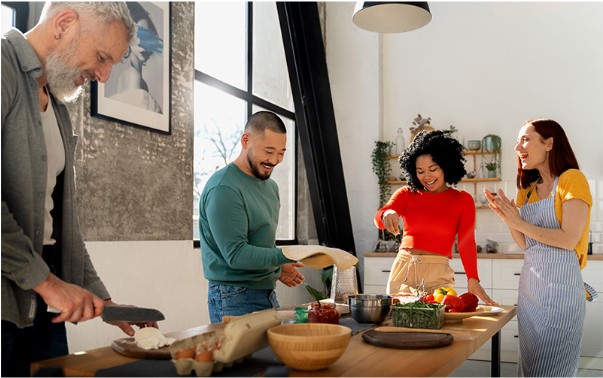
With the growing trend of communal living, co-living rentals are more than just sharing a roof. They’re about coexisting in an environment that balances privacy with shared responsibility. The shared kitchen is where this equilibrium is put to the ultimate test. While operators provide sleek, functional kitchen setups, it’s the unspoken social codes that determine whether the experience feels harmonious or tense.
Discover what tenants and landlords should know about shared kitchen etiquette in co-living rentals in Singapore.
Clean As You Go
Nothing strains community living like a pile of dirty dishes left unattended. Tenants in a co-living rental are expected to clean up immediately after use. Wiping down countertops, disposing of waste properly, and returning shared items to their designated places should be second nature. It’s not just about hygiene — it’s about respect for the next person. Operators can help reinforce this by setting clear cleaning rosters or gentle visual reminders, but ultimately, this rule is upheld by a culture of mutual accountability.
Shared, Not Staked
The fridge and pantry in co-living kitchens can turn into battlegrounds without clear boundaries. One unspoken rule is to never assume communal access to anything not explicitly labelled as shared. Whether it’s oat milk, spices, or eggs, check first. Operators can reduce tension by offering individual storage bins or labelled compartments. Some residents may create a “sharing shelf” for surplus ingredients — but, again, participation is voluntary, not assumed.
Timing and Traffic Flow
While many communal kitchens are open 24/7, peak times can be a headache. Breakfast and dinner hours often see the most traffic, and unwritten etiquette dictates that you cook efficiently and avoid monopolising multiple appliances. If someone is waiting for the hob, it’s good form to offer a time estimate. Communication is integral — a quick “mind if I go first?” or “I just need 10 minutes” can diffuse potential conflicts. Some co-living operators have even adopted booking systems or real-time occupancy indicators to help residents plan their kitchen usage better.
Noise Consideration
Cooking comes with noise — the blender, boiling water, and chopping boards. But in community living, late-night cooking should be approached with consideration. Keep the volume down during quiet hours. This approach doesn’t just apply to noise from equipment; loud conversations, phone calls on speaker, or blaring music are frowned upon in communal zones, especially at night. The best co-living spaces succeed because they attract residents with a baseline of social sensitivity.
ALSO READ: How Communal Living in Singapore Can Save You Money in High-Cost Cities
Cultural Sensitivity and Odours
The city-state’s diverse population means a wide range of cuisines will show up in a community kitchen. This instance creates opportunities for cultural exchange but also challenges with strong odours and differing cooking habits. Fish sauce, fermented dishes, or deep-frying can linger — which is fine if proper ventilation is used and the area is cleaned promptly. Passive-aggressive notes or comments should be avoided. Instead, operators can pre-emptively create guidelines that promote respectful communication around shared preferences.
Respect the Equipment
Appliances in communal kitchens are not personal property. Respect them. Don’t slam microwave doors, overuse the oven without cleaning it, or overload dishwashers. When items break due to misuse, it disrupts everyone’s routine. Operators should routinely inspect and maintain appliances, but tenants should also report malfunctions immediately — not just leave the problem for the next person to discover.
A Space for Socialising, Not Hosting
While it’s natural to strike up a conversation in a communal kitchen, turning it into a full-on gathering spot isn’t always appreciated. Inviting external guests to hang out in the kitchen or taking over the space for hours is inconsiderate. Communal living thrives when shared spaces are seen as functional, not private lounges. If more interaction is needed, many co-living properties provide social lounges specifically for that purpose.
Conclusion
The success of communal living in Singapore is strongly dependent on how shared spaces are treated. The communal kitchen, more than any other zone, becomes a test of interpersonal dynamics, cultural respect, and basic courtesy. Operators can help establish the tone, but it is ultimately up to the community to uphold the standards. If done correctly, the kitchen can be more than just a place to cook; it can be the foundation of a thriving, polite community.
Contact Coliwoo and start your co-living journey with us today.