

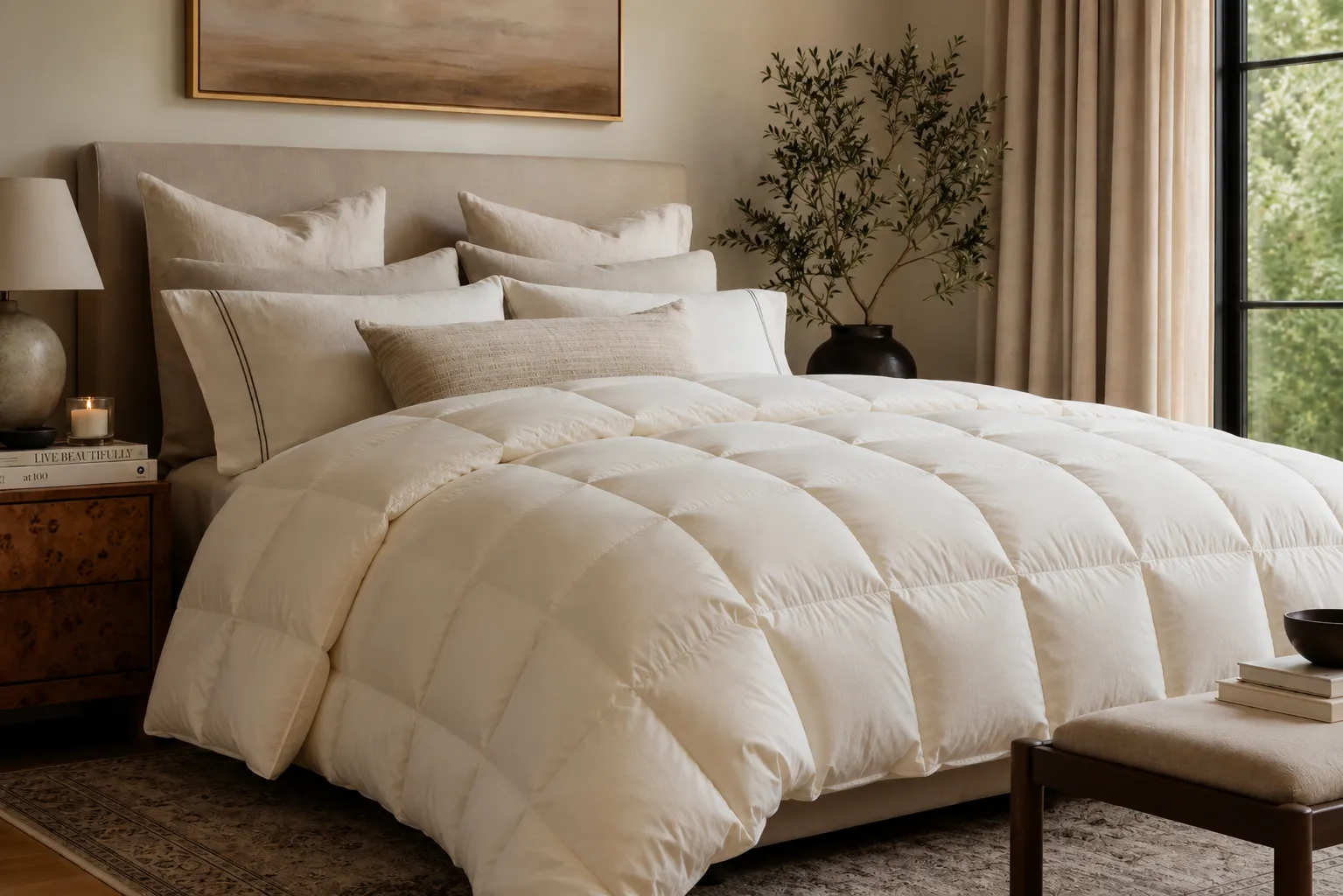
If you love the airy, cloud-soft feel of down but dread waking up overheated, this is for you. The best lightweight goose down comforter delivers what most sleepers actually want: gentle loft, breathable warmth, elegant drape, and that hotel-bed feeling without the heavy, stuffy sleep.
For warm sleepers, couples with mismatched temperature preferences, and anyone upgrading to a more luxurious bedroom, picking the right comforter can get surprisingly complicated. Fill power, shell fabric, box construction, warmth level, and size all matter — and a lot of guides skim past the details that separate “nice” from “I never want to get out of bed.”
What Makes a Lightweight Goose Down Comforter So Special
A lightweight goose down comforter is built to trap just enough warmth while staying breathable and buoyant. Rather than pressing down on the body, it creates a soft microclimate around you — cozy, but never suffocating. The best designs feel lofty but not dense, warm without overheating, soft against the skin, and light enough for summer or year-round layering.
The Sleep Foundation recommends a bedroom temperature between 60 and 68°F to promote better sleep, and that guidance matters because bedding is part of your sleep climate. A comforter that runs too hot can work against restful sleep, while a genuinely lightweight down comforter can keep you comfortable without needing to crank the AC.
Our Favorite Lightweight Goose Down Comforter Picks
For most households, a medium-loft comforter is the sweet spot: airy enough for warm months but substantial enough for transitional seasons. Look for goose down fill rather than mostly feather, a breathable cotton shell, baffle box construction, and a clean finish that styles well in any bedroom.
If you sleep warm or live somewhere hot, an ultra-lightweight option is usually the smarter pick — it gives you the feel of a comforter without the heat trap. Something like the Summer-Breeze down comforter, an ultra-light, all-natural pick with a crisp, breathable shell, keeps the bed feeling polished without turning stifling by midnight.
For anyone who wants that fresh, elevated, boutique-hotel look, a lightweight white down comforter is the classic choice — even fill distribution, elegant edge finishing, and enough loft to look plush under a duvet cover while staying practical for warmer nights.
If sustainability and natural fibers matter to you, an organic cotton goose down comforter is worth the upgrade. Pairing responsibly sourced down with a premium organic shell gives you deeper sleep and a cleaner, more thoughtful bedding setup — a favorite among eco-minded households.
Fill Power, Shell Fabric, and Construction: What Actually Matters
This is where most shoppers get confused. Fill power refers to how lofty the down is — higher fill power generally means better insulation with less actual weight. Fill weight is simply how much down is inside. A premium lightweight comforter typically pairs moderately high fill power with lower overall fill weight, which is how you get something that feels plush without feeling heavy. As WIRED has noted, down insulation offers an exceptional warmth-to-weight ratio and breathability — exactly why it remains such a premium bedding material.
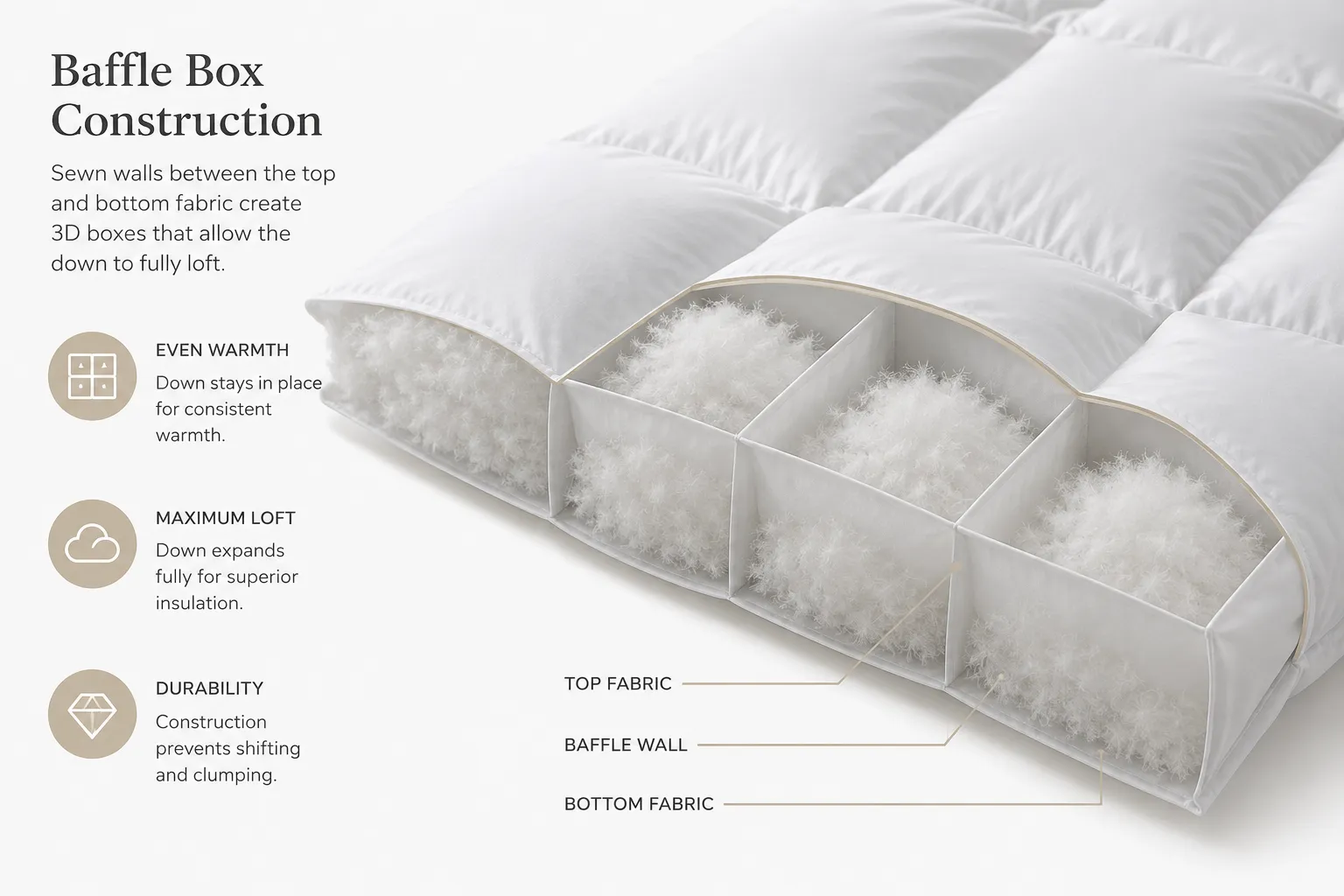
Goose down also outperforms feather-heavy blends here: it’s softer, airier, and loftier, while feathers tend to be denser, flatter, and less breathable. The shell fabric matters just as much — organic cotton, fine cotton sateen, and crisp cotton cambric all breathe better and feel more elevated than synthetic alternatives. And construction style affects even fill distribution: baffle box designs add loft and even expansion, while sewn-through box styles stay flatter and cooler.
Your Duvet Cover Changes the Feel
Even the best lightweight down insert can sleep hotter than it should if it’s paired with a heavy cover. If breathability is the goal, look toward percale cotton, linen, or lightweight organic cotton, and steer clear of dense velvet or heavyweight sateen if you already run warm. Browsing a duvet cover collection alongside your comforter, rather than buying the two separately, makes it much easier to land on a pairing that actually breathes.
Bedroom climate also matters more than the “season” label on the package — AC habits, ceiling fan use, and humidity all shape how a comforter actually performs at night, so it’s worth choosing for your real sleep environment rather than the marketing category.
Picking the Right Size
Sizing affects both fit and how luxurious the bed feels. Twin sizes suit kids’ rooms, dorms, and solo sleepers who run hot; queen is the most versatile choice for most couples and primary bedrooms; and king or cal king sizes reduce blanket tug-of-war for shared beds while giving hotel-style beds their generous, layered look.
The Bottom Line
The best lightweight goose down comforter is the one that matches your actual sleep habits, not just the one with the flashiest fill-power number. For most sleepers, the winning formula is simple: responsibly sourced goose down, a breathable natural shell, even box construction, and a warmth level that feels airy rather than oppressive.
Get the fill, the shell, and the cover working together, and a lightweight down comforter becomes one of the smartest bedroom upgrades you can make — comfortable enough for summer, elegant enough for year-round styling, and genuinely worth waking up to.